


MAIN TAKEAWAYS:
- Workplace safety in historic property restorations helps prevent collateral damage.
- Workplace safety is key to ensuring a restoration project is completed on time and within budget.
- Historic property owners should inquire as to whether a contractor has an in-house safety director and conducts regular safety training.
Restoring a historic commercial or residential property can be a rewarding endeavor. However, preserving historic structures for future generations is a complex task that demands a high degree of skill, experience, and craftsmanship.
Workplace accidents can not only cause injury to workers or building occupants and damage the historic property, but they can also lead to significant project delays and costly expenses. At Renaissance Historic Exteriors, we prioritize creating a safe restoration environment — so much so that our safety program has received formal recognition.
Below are several ways a comprehensive workplace safety program can help reduce historic restoration costs while ensuring your project is completed on time and without incident.
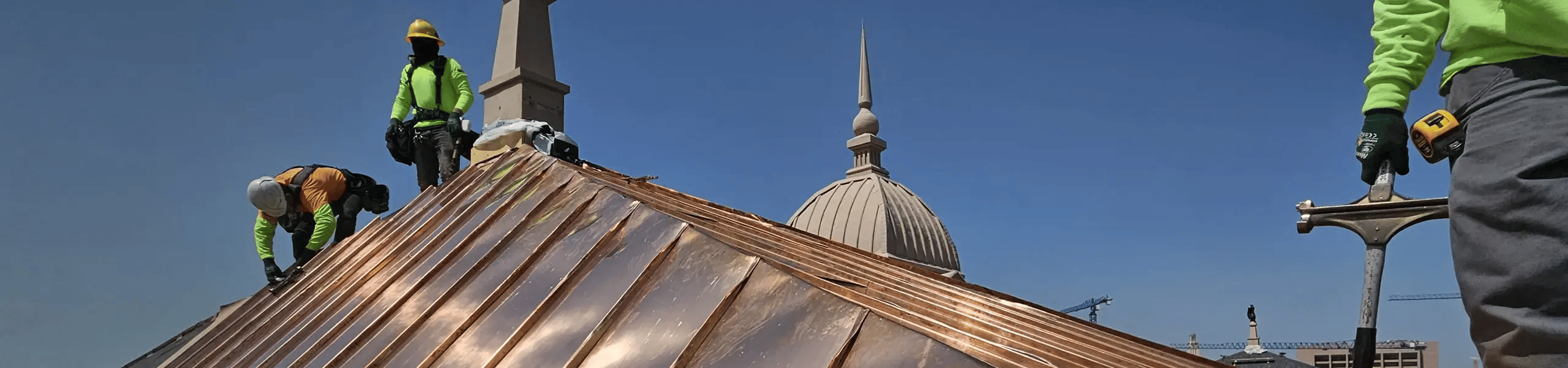
Historic restoration workplace safety helps prevent injuries and liability
The top priority of any historic restoration safety program is reducing the risk of harm to restoration crews, property residents, or others connected to the structure — such as property managers or support staff in commercial buildings.
In addition to preventing injuries, a strong safety program helps mitigate liability concerns by reducing worker injury claims and insurance costs. Such incidents can delay project completion and increase costs significantly.
A comprehensive workplace safety program must address factors like the structural integrity of the property, hazardous materials such as asbestos, and fall risks from uneven or unstable surfaces. Safeguards should be put in place to prevent these types of incidents.
Safe historic restorations help combat collateral damage
Restoring a historic property is often an interconnected process. For example, repairing a roof may involve work on chimneys, masonry, gutters, or downspouts. In some cases, the work may be limited to one area, but safety protocols are essential to avoid damage to other parts of the structure.
Careful safety measures protect delicate architectural details that may be difficult or expensive to repair or replace. This is especially important when heat is used to fabricate or modify architectural elements.
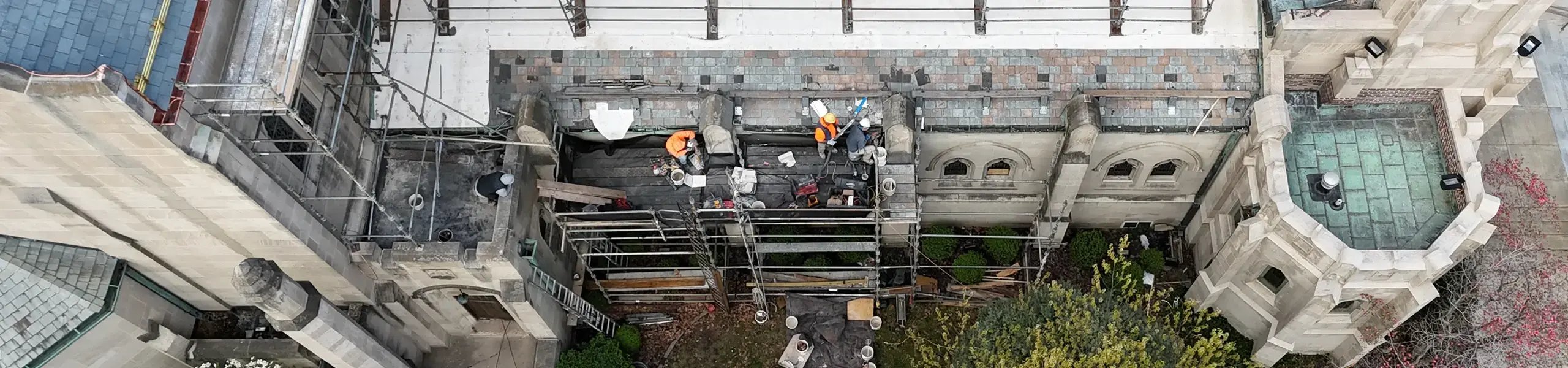
A safe restoration worksite avoids work stoppages
Workplace accidents can halt restoration work for days, weeks, or longer, depending on severity. Major accidents may require investigations, and damaged materials can lead to long lead times for replacements.
Such delays are particularly costly if they occur before winter, when productivity is already affected by weather conditions like cold, snow, and ice. A strong safety program helps prevent these accident-related stoppages.
Common causes of work stoppages include structural failures, equipment malfunctions or misuse, and exposure to hazardous materials. Partnering with a trusted, experienced historic restoration contractor with a proven safety record is critical to avoid these costly interruptions.

Workplace safety supports a detailed, high-quality restoration
A quality historic restoration requires precision, patience, and expertise. Restoration technicians that are adequately trained and have experience with safety protocols tend to be better prepared, more attentive, and more consistent in their craft. The end result is a more thorough, detailed, and historically accurate restoration.
This helps reduce restoration costs in a couple of key ways. First, it reduces the likelihood that additional repairs will be needed to correct errors or missteps with the original restoration. It also helps ensure that technicians don’t rely on shortcuts to get the job done faster.
When a restoration team feels safe and supported, they’re able to focus on what matters most: honoring the building’s history and historical value.
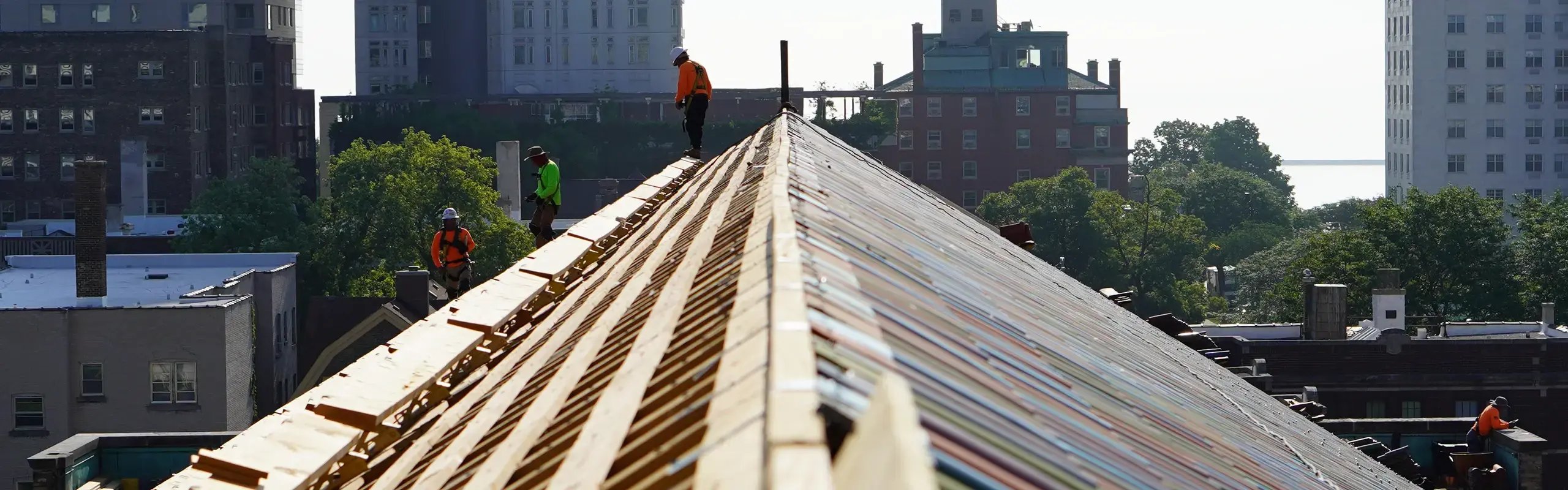
A strong safety program reflects a trusted, professional restoration contractor
A strong, recognized safety program speaks volumes about a historic restoration contractor’s integrity and professionalism. Contractors who prioritize safety demonstrate financial responsibility, accountability, and respect for your historic property. Plus, a safety program reflects pride in one’s work.
When vetting restoration contractors, make sure to inquire whether the contractor:
- Has received awards or recognitions for safety excellence
- Conducts regular safety trainings and has a dedicated in-house safety expert
- Communicates clearly about any workplace risks and measures taken to mitigate those risks
- Follows defined safety protocols as outlined in a project proposal
Renaissance Historic Exteriors has more than three decades of historic restoration experience and the utmost in workplace safety has been prioritized every step of the way. With our own in-house safety director, you can rest easy knowing your historic restoration will be completed with safety as a top priority.
Contact us to schedule an inspection of your historic property.


